Law Commission Urged to Consider Exceptional Circumstances in POCSO Sentencing: Allahabad High Court
The Allahabad High Court has allowed a habeas corpus petition filed by a man seeking the release of his partner, who was recovered and sent to a Bal Griha while a case under the Protection of Children...
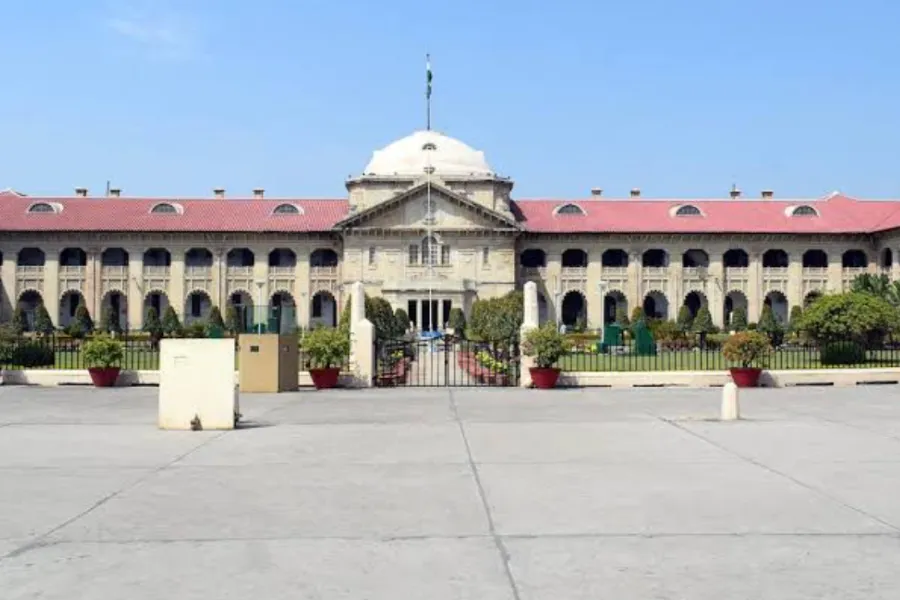
The Allahabad High Court has allowed a habeas corpus petition filed by a man seeking the release of his partner, who was recovered and sent to a Bal Griha while a case under the Protection of Children from Sexual Offences (POCSO) Act, 2012, remained pending against him.
A division bench of Justice Atul Sreedharan and Justice Achal Sachdev passed the order on October 5, 2026, in Habeas Corpus Writ Petition No. 987 of 2026.
The petitioners’ counsel submitted that the couple had eloped and jointly executed an affidavit dated September 1, 2025, describing themselves as husband and wife. The State and the woman’s father claimed that her date of birth was July 25, 2010, making her a minor. The court was also informed that she had given birth to a child while staying at the Bal Griha.
Court Raises Concerns Over Education and POCSO Law
During the hearing, the bench noted that the woman had studied only up to Class V and could not read a Hindi newspaper or write beyond her name. Her father told the court that he was illiterate, worked as a labourer and earned approximately Rs. 10,000 to Rs. 12,000 per month while supporting his family.
The court questioned the social consequences of applying the POCSO Act strictly in cases involving young couples and requested the Law Commission to examine possible amendments. These could include giving Special Judges greater discretion in exceptional cases and considering alternative punishments, including community service.
The bench observed, “ignorance of law cannot be an excuse for violating the law.”
Age Determination and Court's Decision
The court noted that no school-issued date of birth certificate, matriculation certificate or birth certificate from a municipal authority or Panchayat had been produced. An ossification test had assessed the woman’s age at approximately 18 years.
Relying on the material available in the habeas corpus proceedings, the court held that she was a major. As she expressed her desire to live with her husband, the bench allowed the petition and permitted her to leave the court premises with him.
The court clarified that its observations on factual questions would not influence the pending POCSO trial or be used by the defence. The trial court must decide the criminal case independently, based on the evidence presented before it.
The court also directed that a copy of its order be sent to the Law Commission for consideration.
Case Details
Case Title: Habeas Corpus Writ Petition No. 987 of 2026 — Petitioner No. 1 and Another vs State of U.P. and 4 Others
Case Number: Habeas Corpus Writ Petition No. 987 of 2026
Judge or Bench: Justice Atul Sreedharan and Justice Achal Sachdev
Decision Date: October 5, 2026